The Strange Story of Iggy the Iguana

Ellie Bunting • May 20, 2026

The Strange Story of Iggy the Iguana


One of our EIHS board members recently shared this fascinating article with me. Although I don’t think it quite fits into our Murder Mystery book, the story was simply too good not to share. So here is the strange — and entirely true — tale of Iggy the Iguana.
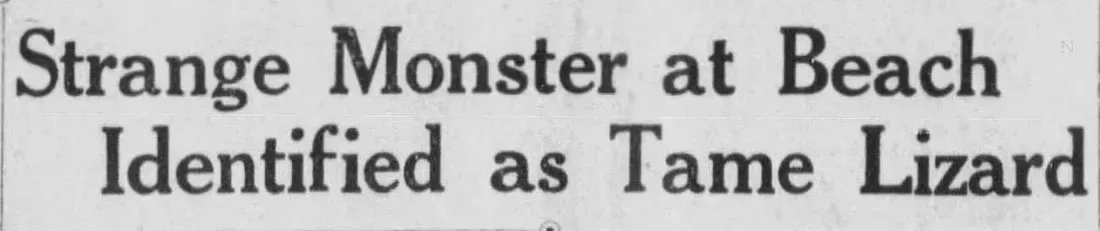
Headline in the News-Press on September 18, 1935

To tell this story, we need to travel back to 1935, when Fort Myers Beach was little more than a tiny fishing village with a population of around 300 people. The details of this story were pieced together from articles published in


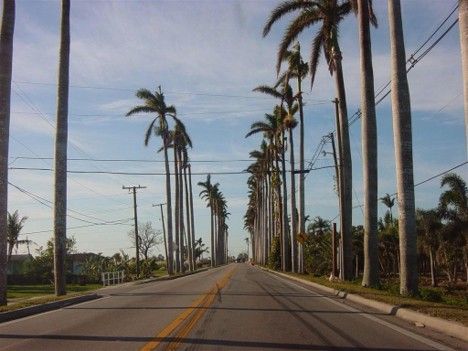
The mystery began in September 1935 when a “dragon-like creature” was spotted crossing San Carlos Boulevard. Lewis B. Reynolds of Selma, Alabama, reportedly saw the creature and even managed to photograph it. The headline that followed captured the imagination of the community:


“Giant Iguana Eludes Posse; Buzzards May Take Trail.”
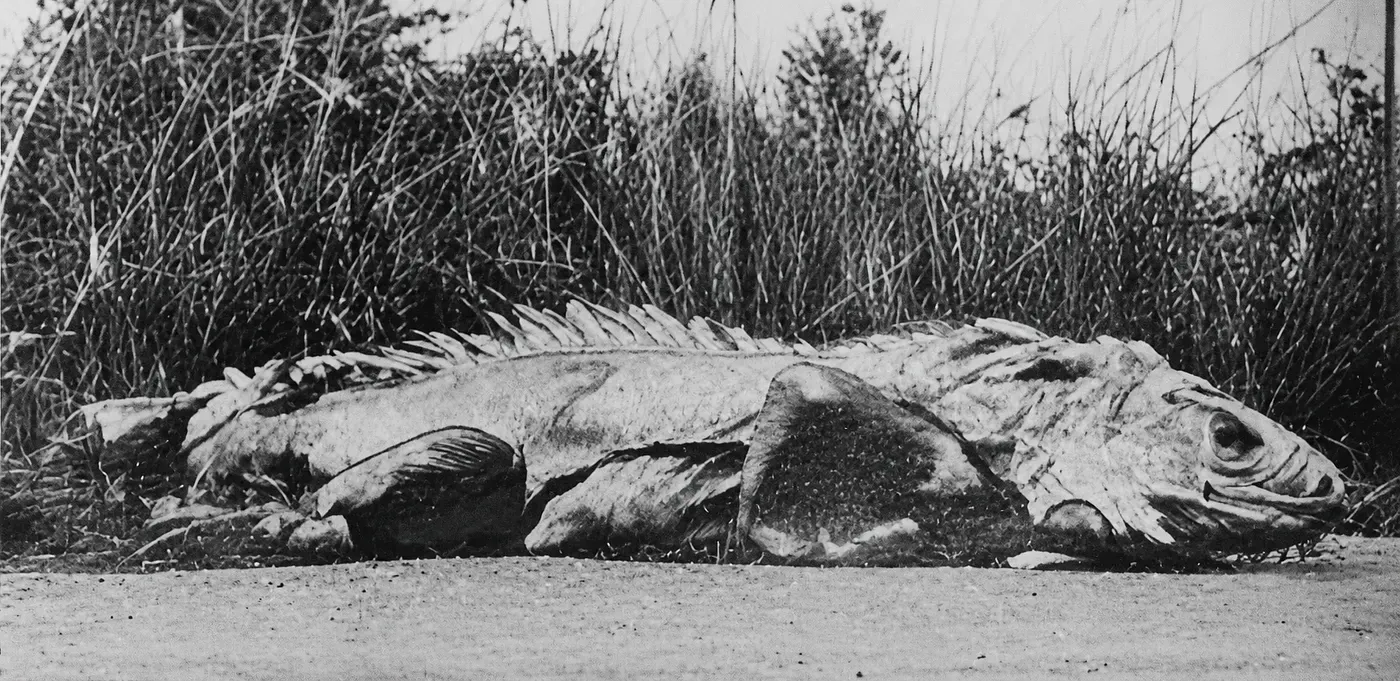

This is the photo that Mr. Reynolds took of the creature as it crossed the road.

Although we are all too familiar with iguanas on the island today (we have a huge one who lives in our lake), back in 1935, the appearance of this creature caused quite a stir on the island. Men, dogs, and even buzzards were enlisted in the search for the mysterious reptile that had Island residents buzzing with excitement — and a little fear.


For several hours after the sighting, a group of about twenty islanders enlisted the help of their hunting dogs to track the creature. Unfortunately, they were unable to pick up the creature’s scent in the mangroves, and as evening approached, the group abandoned the search. Many concluded that the reptile had likely slipped into the water, disappearing into the mangroves.


After scientists examined the photograph, they suggested the animal was probably a “giant marine iguana” native to the West Indies. According to the experts, these creatures were equally comfortable on land and in the water.


Developer Thomas Phillips speculated that the iguana may have been swept into the backwaters during the devastating 1935 Labor Day Hurricane.


When further searches failed, fishermen theorized that the creature was hiding somewhere among the mangrove islands in the back bay. Their plan was simple: wait for buzzards to circle overhead and investigate the area in hopes the animal had died.


There was one false alarm when a dead animal washed ashore near the south end of the island. At first, residents feared it might be the iguana, but it was later believed to have been a dolphin that had perished during the hurricane.


Eventually, another possible explanation emerged. The News-Press reported that Mrs. Nelson Perry of Sanibel claimed Vincent Astor, returning from the Galápagos Islands, had released six marine iguanas on Matecumbe Key as part of a “natural science experiment.” Supposedly, the Fort Myers Beach reptile was one of those animals.


Residents were assured that the creature was harmless and should not be disturbed.


Then, in October 1937 — two years after the original sighting — the story took another turn.

On a beautiful day on the beach near Nettie’s Restaurant, a man named Mr. Hammer spotted the elusive reptile again. Several men grabbed ropes and headed out to capture it. They eventually cornered the creature near the Gulf Shore Inn, but it slipped into the Gulf before they could secure it.


Not long afterward, the iguana returned to shore, and the men managed to lasso it.

Two years later, the “monster” was finally captured.

The creature measured about four feet long, considerably smaller than the six-foot monster described in earlier reports. One of the men involved in the capture, retired Massachusetts gasoline dealer Mr. Thiers, later told reporters:


“Sure we were afraid, but the big lizard did not seem to be afraid of us, and when we came close, it did not put up any resistance. I slipped the noose around the iguana’s neck and it came along.”


Brent Todd, a naturalist and herpetologist who examined the animal, declared it to be a ring-tailed iguana from Panama rather than a Galápagos marine iguana as originally believed.


The reptile had a long tail banded with yellow and black scales, matching descriptions of the ring-tailed species.


Once captured, the iguana was loaded into a paddy wagon and transported to the Lee County jail in Fort Myers. During the excitement, Joe Sandberg reportedly suffered a painful bite on the finger while attempting to determine “if the iguana had any teeth.”


When word spread about the capture, Fort Myers residents decided the creature should be kept as an attraction in the city park. Interest in the so-called “Monster of Fort Myers Beach” was so great that city officials built a special cage where the iguana — now affectionately named “Iggy” — could entertain visitors by climbing wire fencing, splashing in a bathtub, and scampering through a grapefruit tree placed inside the enclosure.


For a time, Iggy was the only attraction of the city’s tiny “municipal zoo.”


Sadly, the story did not have a happy ending.


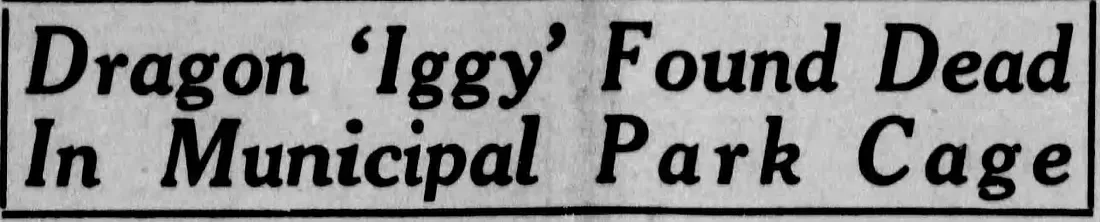
In December 1937, Iggy was found dead in his cage. The News-Press reported that the cause of death was “some obscure iguana malady.” Others jokingly suggested the reptile may have died from overeating or excessive Christmas celebrating.

The mayor’s secretary, who had been placed in charge of feeding Iggy, insisted he had carefully followed instructions from reptile experts who advised feeding the animal only once a week.


The final newspaper account ended on a surprisingly touching note:


“Last night, the iguana lay dead in his cage, far from home in the salt water marshes and mangrove jungles, while small children still peered into his cage, remarking how quietly he ‘slept.’”


It remains one of the strangest and most memorable stories ever reported on Fort Myers Beach.
By Ellie Bunting April 1, 2026
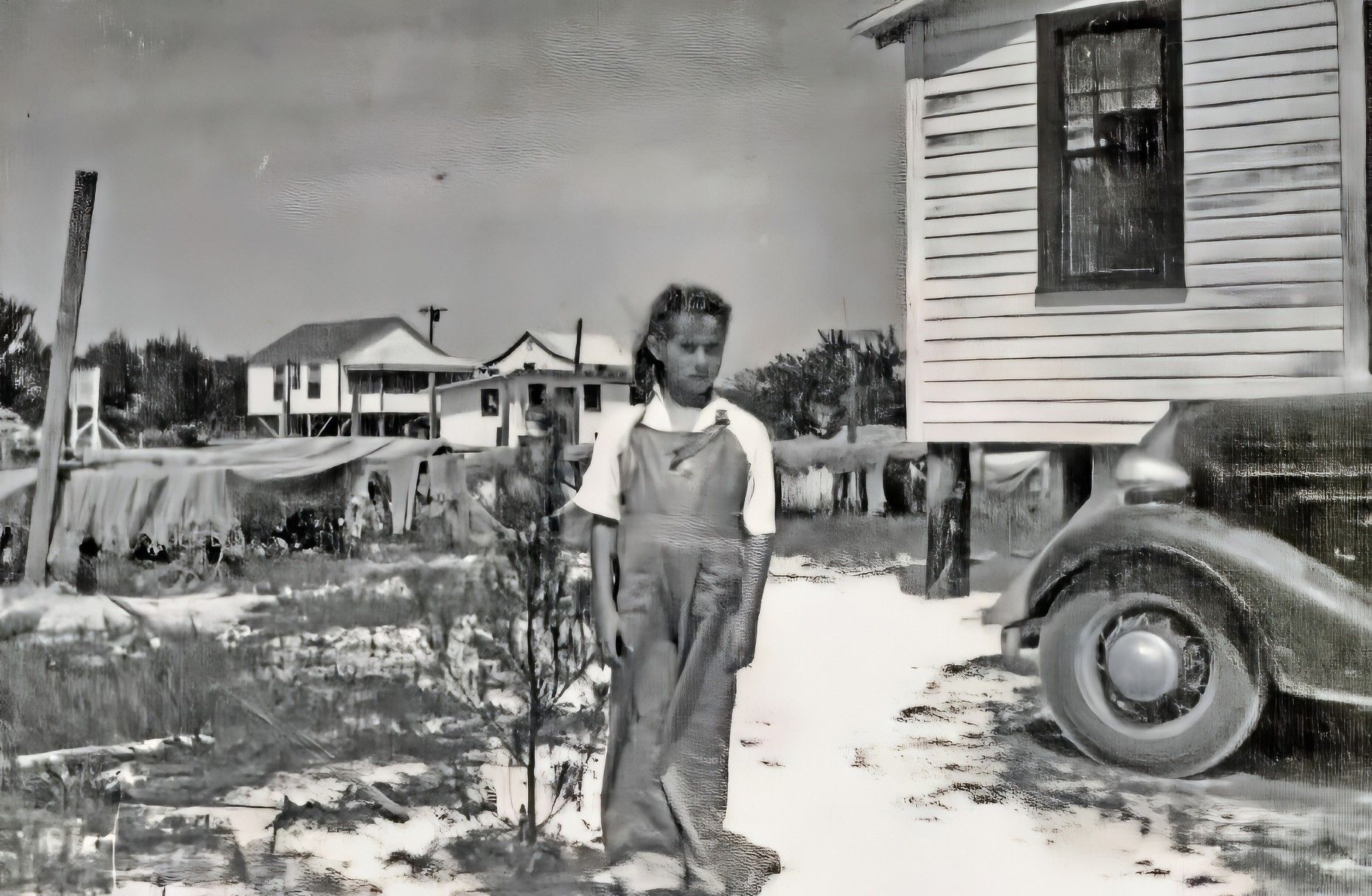
Forever an Islander: Fran Santini
By Ellie Bunting December 27, 2024
In January, the speaker for Estero Island Historic Society’s public meeting will be Martha Bireda, director of the Blanchard House Museum of African American History and Culture of Charlotte County. Ms. Bireda is the great-granddaughter of Queen Evans Andrews, a pioneer who came to Punta Gorda in 1897 from Charleston, South Carolina. She will share stories of the Gullah culture and of her visits with the Gullah people who live on James and Johns Islands. Having just visited the Georgia and South Carolina Coasts, I thought this might be a good time to do a bit of research into the Gullah culture in anticipation of our January meeting.
By Ellie Bunting September 1, 2024
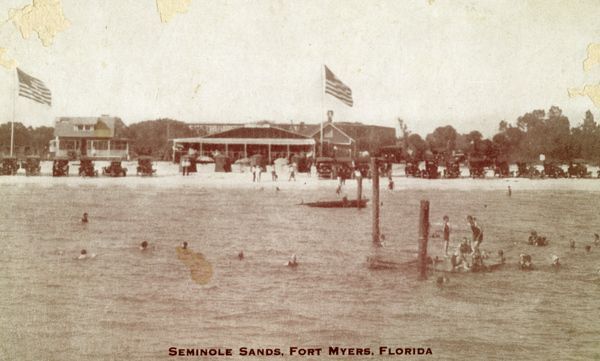
Who was Jack DeLysle? I had been reading about him in different articles as I was doing research on the early days on the island. I had come up empty except for one cryptic note I found that he “left the island under mysterious circumstances.” Yesterday, I was going through copies of the Sand Paper that were donated to the historic society and found an article by Jean Matthews that was about Jack DeLysle. This is what I learned about the mystery man who played a pivotal role in the early development of the island. Jack and his brother, John, first appeared in Southwest Florida after their ship ran aground at the moth of Gordon’s Pass. When Sheriff Frank Tippins arrived to investigate the incident, he found 320 boxes of “Soap” that turned out to be whiskey. The brothers had apparently picked up the moonshine in Alabama and sailed to Tampa, then Key West, and finally to Cuba. When they returned to Florida, they were caught in a storm and the ship was wrecked. “Captain” Jack DeLysle claimed he was in the British Army; however, he and John were arrested and turned over to the Feds. Both men were found innocent by a jury in Tampa and Jack returned to Fort Myers where he was into many different endeavors. Although he wrote poetry that he published in the local paper, DeLysle is best known for his efforts to raise money to build a bridge to Fort Myers Beach. He joined the Crescent Bridge Road Company where he met E.E. Damkohler. Damkohler was trying to raise money to build a road from Miner’s Corner to the Island. DeLysle saw potential in Crescent Beach ( old name for Fort Myers Beach)being developed into a tourist mecca like Miami Beach. He purchased property in Case Subdivision and built the Seminole Sands Casino. DeLysle’s casino had a game room with tables and slot machines, changing rooms, a dance pavilion, and a restaurant.
By Ellie Bunting June 14, 2024
The Tip Top was a popular hangout for teens back in the day.
By Ellie Bunting May 7, 2024
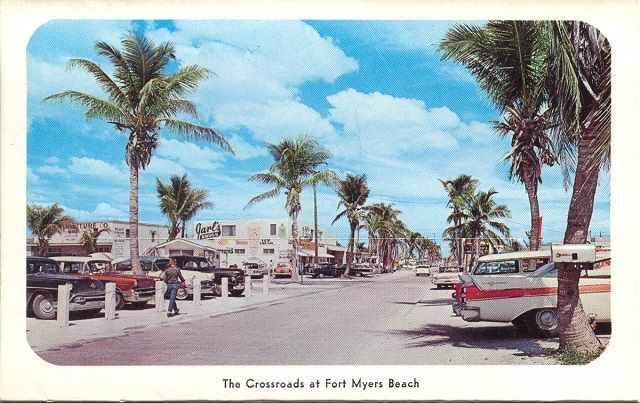
While doing research for Lost Icons, I came across a quote in the News-Press that I have cited several times in other articles and presentations. Written in the late 1970s, this quote seems to bring the past and the future together quite nicely: “Nobody really wants to stop progress, but there is an increasing awareness that the island is in danger of becoming a polluted paradise.” Over fifty years ago, the paper stated that Fort Myers Beach was at a crossroads. The 70s were a time of rapid, uncontrolled development with over 68 condos being developed in a single decade. This led residents to vote to incorporate the town so we could control our own destiny and stop the over-development of our island. The newly born town elected its first town council who worked very hard to create a comp plan that would guide our development and preserve our island lifestyle. This plan was completed in 1995 and had served us well until Hurricane Ian damaged every building on the island. Now that we are in the rebuilding mode, we are once again at a crossroads: Do we stick to the comp plan and turn down the developers who want to build higher and bigger? So far, the council has been carefully considering all arguments and is making logical decisions trying to keep as close to the comp plan as possible. The council and residents need to tread carefully to make sure, in our efforts to build back, we spend time anticipating the unintended consequences of building back bigger. One very good example of this is the recent attempt of two legislators to take back 225 acres that are part of the Estero Bay Aquatic Preserve. (More on this in another post). This was not the first time our beautiful back bay was threatened. Let’s go back to the 1960s when a group of concerned residents decided to take action to preserve the beauty of our back bay. Back to the Future
By Ellie Bunting November 10, 2023
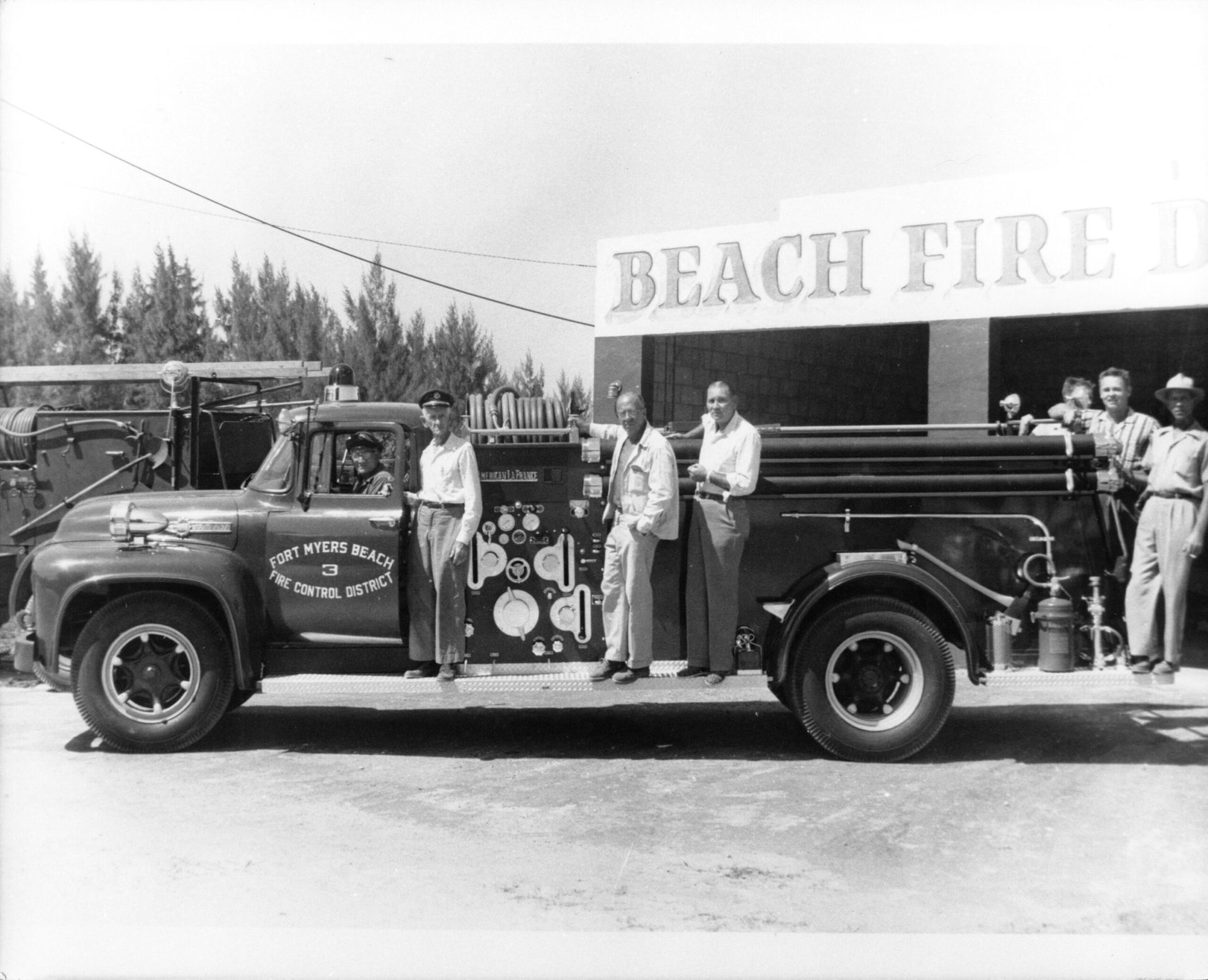
I have been reading recently about the plan to merge the FMB Fire Department with Bonita. I am by no means an expert on how or if this would be a money saving move, but I do know that the FMB Fire Department has been the pride of our island since 1949 when the Beach Volunteer Fire Department was born at “Jenk’s Bar” on San Carlos Island. Twenty-two men attended the banquet meeting. Earl Howie was the first Fire Chief, and J. Travis Cowart was elected Fire Captain. This was the beginning. Prior to this time, there was no established fire department on the island, and the closest fire apparatus was 20 miles away in Fort Myers. The information in this article comes from a small booklet written by former Chief John McCarthy called simply “The History of the Fort Myers Beach Fire Department.”  After raising funds from the island residents, the new department purchased a small two-wheeled spray pump, tank, and trailer that was pulled by a borrowed jeep (McCarthy). These were housed at Red Coconut. Residents could call the department by dialing 2541, a precursor to 911. In April 1950, an old international war-surplus fire/rescue crash truck was purchased. This was a step up from the original truck and was the first real fire apparatus that the department owned. It lasted until May 1964 when it was sold to Leigh Acres Volunteer Fire Department.
By Ellie Bunting August 29, 2023
Yesterday I was surfing the Internet, and I came across an article about haunted restaurants. This article mentioned the Whale (formerly the Beached Whale and before that the Mermaid Club) as being haunted by the ghosts of Jim and Mary Galloway (I covered their murder in an earlier posting). Suddenly, I remembered reading about another haunted restaurant on the island: the Holmes House. This led me down a rabbit hole as I got caught up in trying to learn more about the ghost that was supposed to be the daughter of the restaurant owner who had died (I can’t remember how she was supposed to have died). Unfortunately, I came up empty on the ghost story, but I did learn some interesting facts about this lost icon of Fort Myers Beach.
By Ellie Bunting April 27, 2023
The passing of longtime Beach resident AJ Bassett this week is another loss for our island. AJ was one of the few residents still alive who were on the island in the 1940s. When her newly widowed mother, Mildred, packed up her three children (AJ, Connie, and Frandy) and her mother and drove from Philadelphia to Fort Myers Beach, there were just 279 people living on the island. Connie and AJ were only 6 years old. The family rented a cottage on the beach and began their new life as islanders.
By Ellie Bunting March 16, 2023
For the past few weeks, volunteers have been busy painting street signs to help people navigate on the island. Very few of the “Approved” signs survived the storm, so this was a great way for people to help out with the rebuilding of FMB. Unfortunately, some controversy has arisen about these signs since they are not “up to code.” I thought this might be a good time to look back about seventy years when the last sign controversy rocked the Beach.
By Ellie Bunting December 28, 2022
Times Square after Ian. Every business on the gulf was wiped out. “Mobile homes, boats, washing machines, parts of roofs and walls and dining room sets were scattered through miles of mangrove jungles lining Estero Bay. Some residents who built their homes on the ground level saw water levels as high as five feet on their living room walls. In some spots along the bay, mangled boats were piled on top of one another or sunk beneath the waves with only their bows or sterns visible. The crushing winds toppled virtually every tree. About five frame cottages had been swept into the Gulf. The driveway was blocked by a house that had been blown there from across the highway. For week’s after the storm, hundreds of men and women were digging out and repairing homes and businesses up and down the island, some with shovels, others with chainsaws plugged into gas powered generators. Seven days a week, the grinding noise of machinery droned on, making the beach sound like one giant factory.” Does this sound familiar? This was written by long time beach resident and News-Press reporter, Lee Melsek in 1991 as he was reflecting on a Hurricane that wiped out Fort Myers Beach in 1960. The headline said it all: Donna’s fury unimaginable. 1960 hurricane came close to washing away Fort Myers Beach. I found this article while going through some Christmas decorations, and it brought back memories of September 10, 1960. In his article, Melsek reflects on his experiences before, during, and after the storm. This story could have been written today.