
BLOGS
MY blog
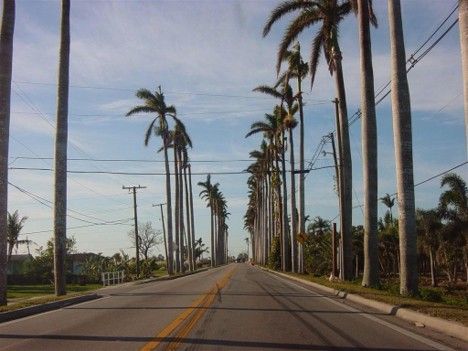
The Palms Still Stand: Searching for Pahokee’s Vanished Past
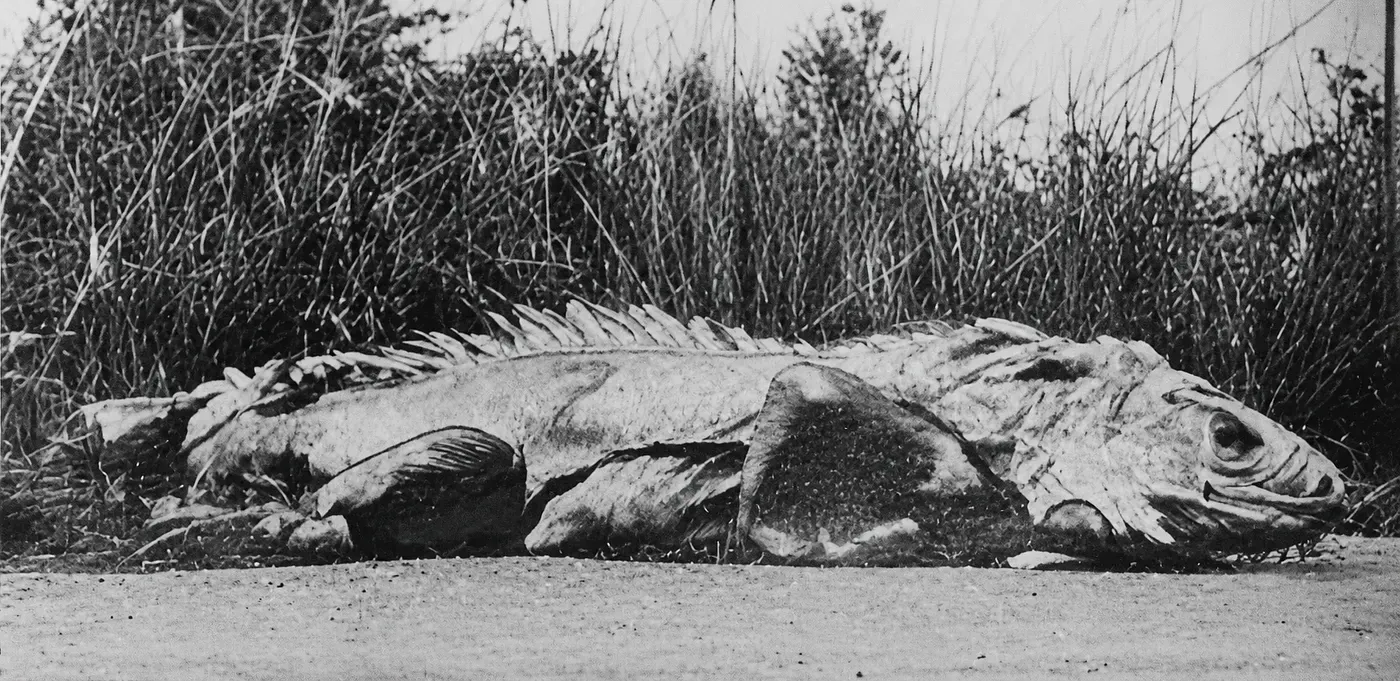
The Strange Story of Iggy the Iguana
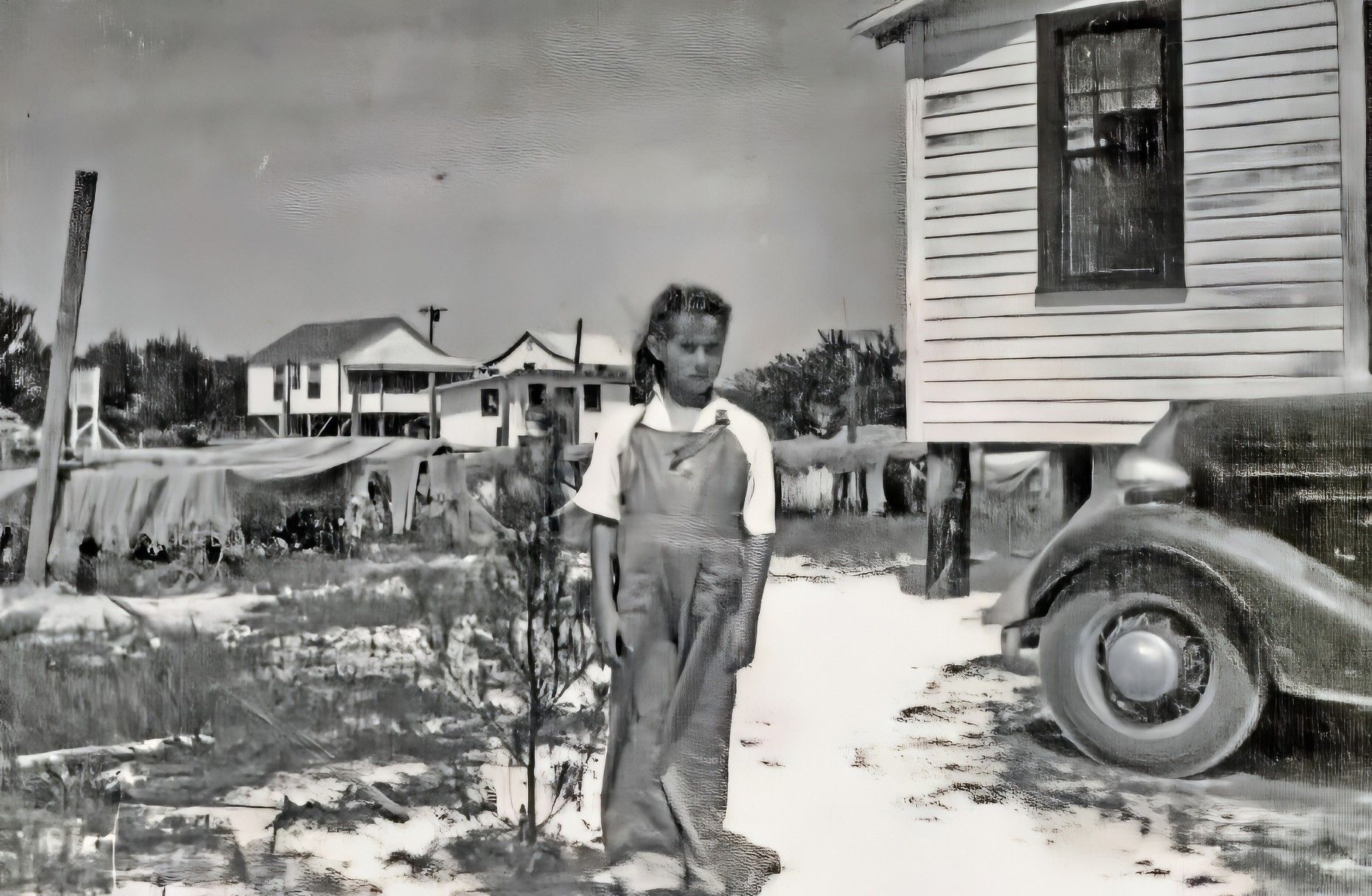
Forever an Islander: Fran Santini
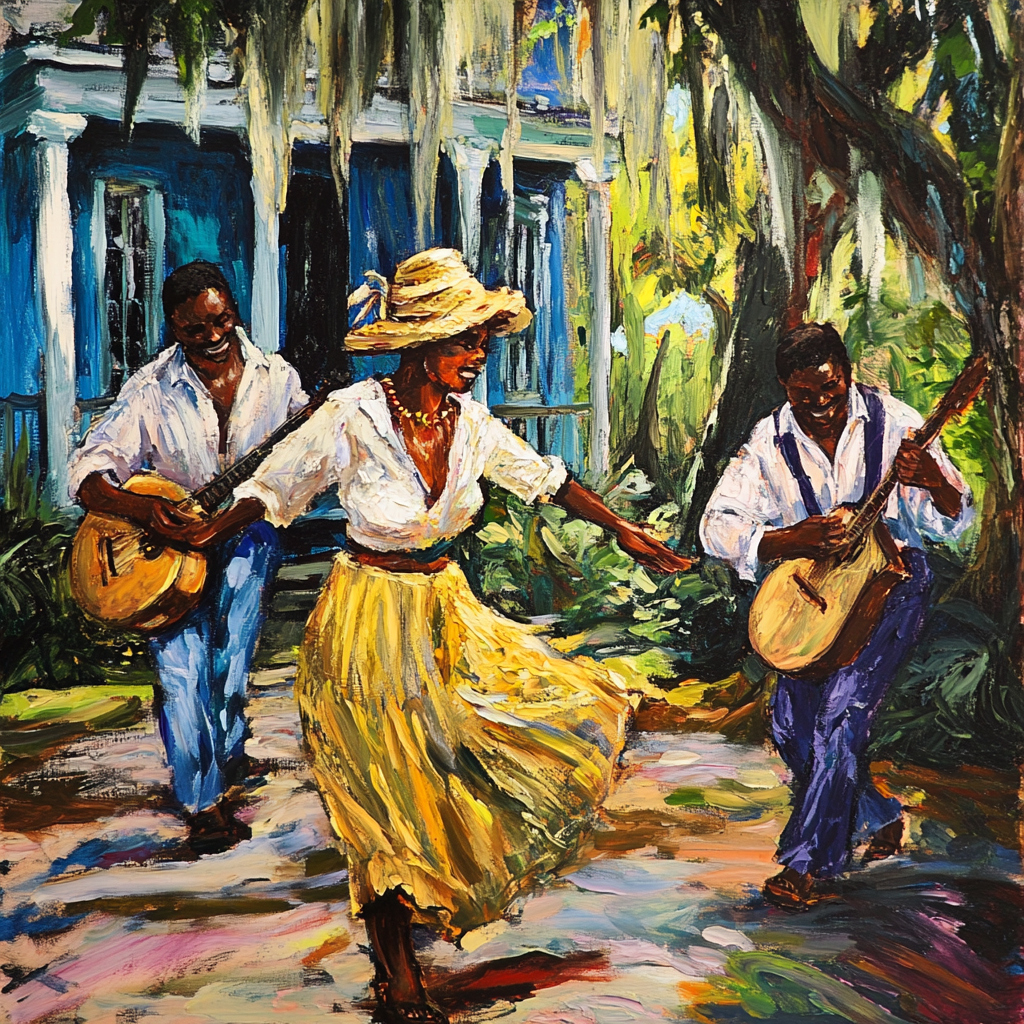
In January, the speaker for Estero Island Historic Society’s public meeting will be Martha Bireda, director of the Blanchard House Museum of African American History and Culture of Charlotte County. Ms. Bireda is the great-granddaughter of Queen Evans Andrews, a pioneer who came to Punta Gorda in 1897 from Charleston, South Carolina. She will share stories of the Gullah culture and of her visits with the Gullah people who live on James and Johns Islands. Having just visited the Georgia and South Carolina Coasts, I thought this might be a good time to do a bit of research into the Gullah culture in anticipation of our January meeting.
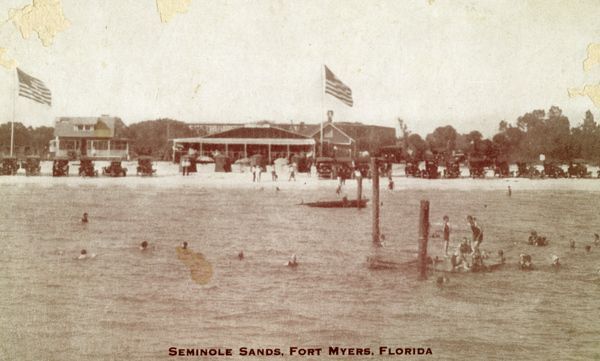
Who was Jack DeLysle? I had been reading about him in different articles as I was doing research on the early days on the island. I had come up empty except for one cryptic note I found that he “left the island under mysterious circumstances.” Yesterday, I was going through copies of the Sand Paper that were donated to the historic society and found an article by Jean Matthews that was about Jack DeLysle. This is what I learned about the mystery man who played a pivotal role in the early development of the island. Jack and his brother, John, first appeared in Southwest Florida after their ship ran aground at the moth of Gordon’s Pass. When Sheriff Frank Tippins arrived to investigate the incident, he found 320 boxes of “Soap” that turned out to be whiskey. The brothers had apparently picked up the moonshine in Alabama and sailed to Tampa, then Key West, and finally to Cuba. When they returned to Florida, they were caught in a storm and the ship was wrecked. “Captain” Jack DeLysle claimed he was in the British Army; however, he and John were arrested and turned over to the Feds. Both men were found innocent by a jury in Tampa and Jack returned to Fort Myers where he was into many different endeavors. Although he wrote poetry that he published in the local paper, DeLysle is best known for his efforts to raise money to build a bridge to Fort Myers Beach. He joined the Crescent Bridge Road Company where he met E.E. Damkohler. Damkohler was trying to raise money to build a road from Miner’s Corner to the Island. DeLysle saw potential in Crescent Beach ( old name for Fort Myers Beach)being developed into a tourist mecca like Miami Beach. He purchased property in Case Subdivision and built the Seminole Sands Casino. DeLysle’s casino had a game room with tables and slot machines, changing rooms, a dance pavilion, and a restaurant.
The Tip Top was a popular hangout for teens back in the day.
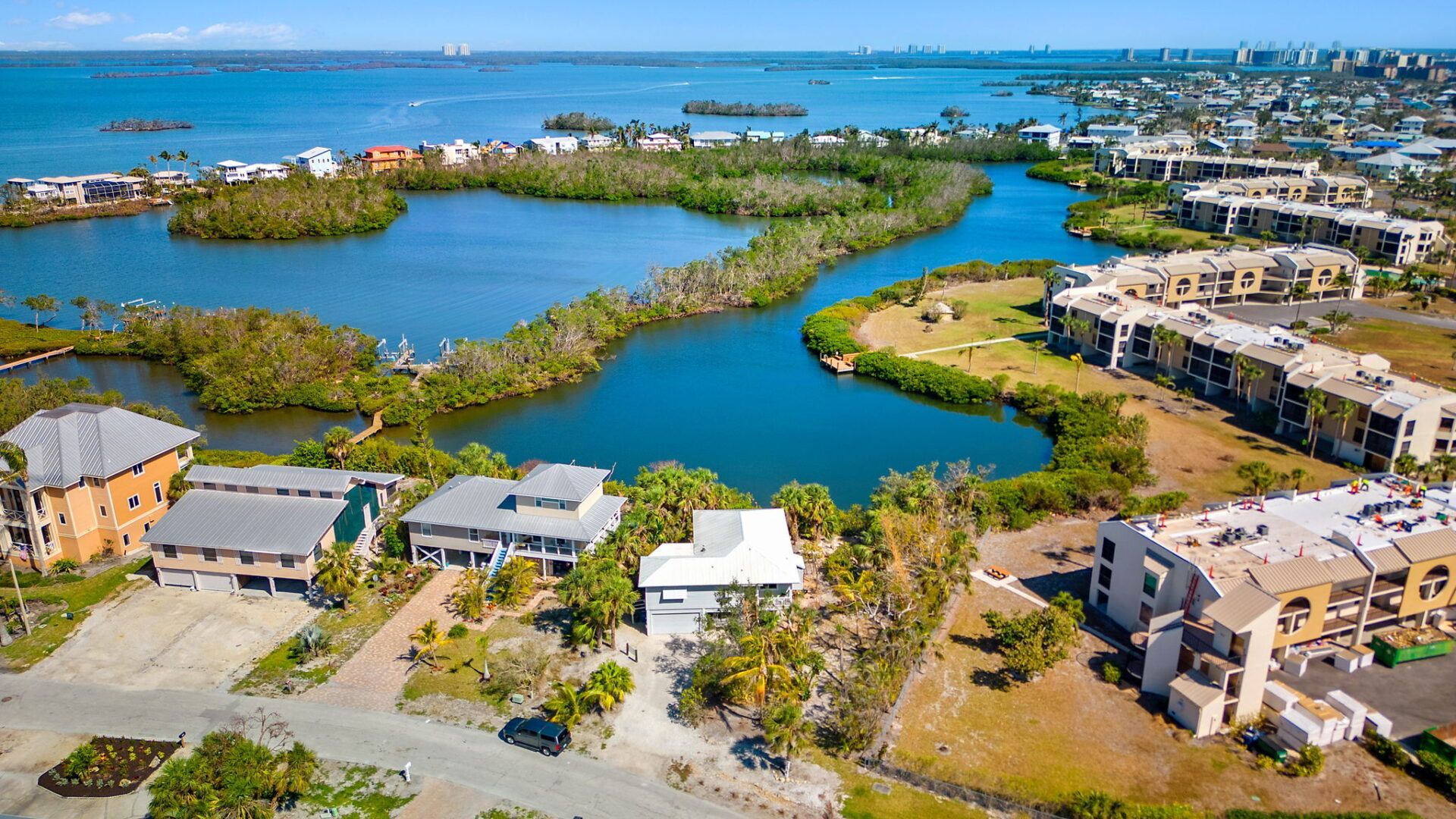
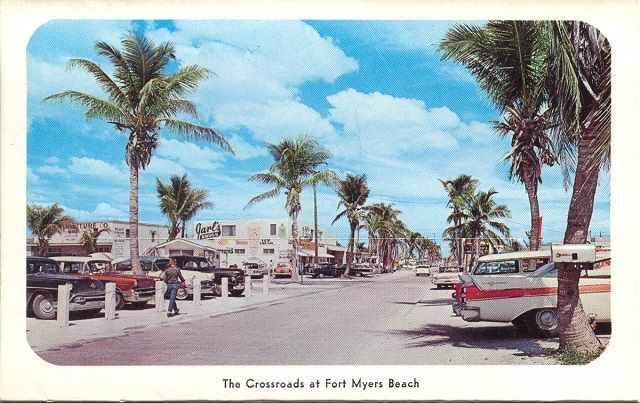
While doing research for Lost Icons, I came across a quote in the News-Press that I have cited several times in other articles and presentations. Written in the late 1970s, this quote seems to bring the past and the future together quite nicely: “Nobody really wants to stop progress, but there is an increasing awareness that the island is in danger of becoming a polluted paradise.” Over fifty years ago, the paper stated that Fort Myers Beach was at a crossroads. The 70s were a time of rapid, uncontrolled development with over 68 condos being developed in a single decade. This led residents to vote to incorporate the town so we could control our own destiny and stop the over-development of our island. The newly born town elected its first town council who worked very hard to create a comp plan that would guide our development and preserve our island lifestyle. This plan was completed in 1995 and had served us well until Hurricane Ian damaged every building on the island. Now that we are in the rebuilding mode, we are once again at a crossroads: Do we stick to the comp plan and turn down the developers who want to build higher and bigger? So far, the council has been carefully considering all arguments and is making logical decisions trying to keep as close to the comp plan as possible. The council and residents need to tread carefully to make sure, in our efforts to build back, we spend time anticipating the unintended consequences of building back bigger. One very good example of this is the recent attempt of two legislators to take back 225 acres that are part of the Estero Bay Aquatic Preserve. (More on this in another post). This was not the first time our beautiful back bay was threatened. Let’s go back to the 1960s when a group of concerned residents decided to take action to preserve the beauty of our back bay. Back to the Future
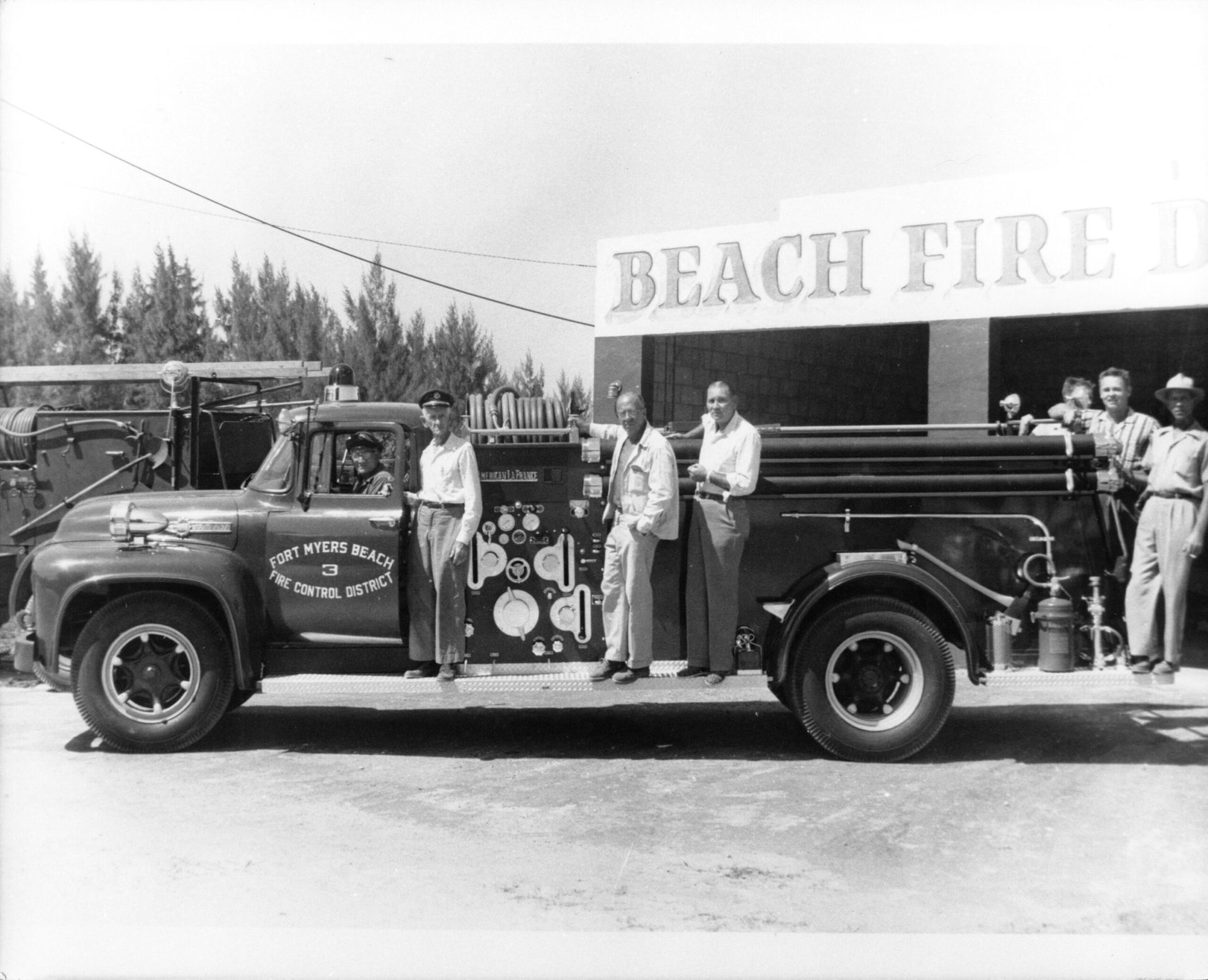
I have been reading recently about the plan to merge the FMB Fire Department with Bonita. I am by no means an expert on how or if this would be a money saving move, but I do know that the FMB Fire Department has been the pride of our island since 1949 when the Beach Volunteer Fire Department was born at “Jenk’s Bar” on San Carlos Island. Twenty-two men attended the banquet meeting. Earl Howie was the first Fire Chief, and J. Travis Cowart was elected Fire Captain. This was the beginning. Prior to this time, there was no established fire department on the island, and the closest fire apparatus was 20 miles away in Fort Myers. The information in this article comes from a small booklet written by former Chief John McCarthy called simply “The History of the Fort Myers Beach Fire Department.” After raising funds from the island residents, the new department purchased a small two-wheeled spray pump, tank, and trailer that was pulled by a borrowed jeep (McCarthy). These were housed at Red Coconut. Residents could call the department by dialing 2541, a precursor to 911. In April 1950, an old international war-surplus fire/rescue crash truck was purchased. This was a step up from the original truck and was the first real fire apparatus that the department owned. It lasted until May 1964 when it was sold to Leigh Acres Volunteer Fire Department.
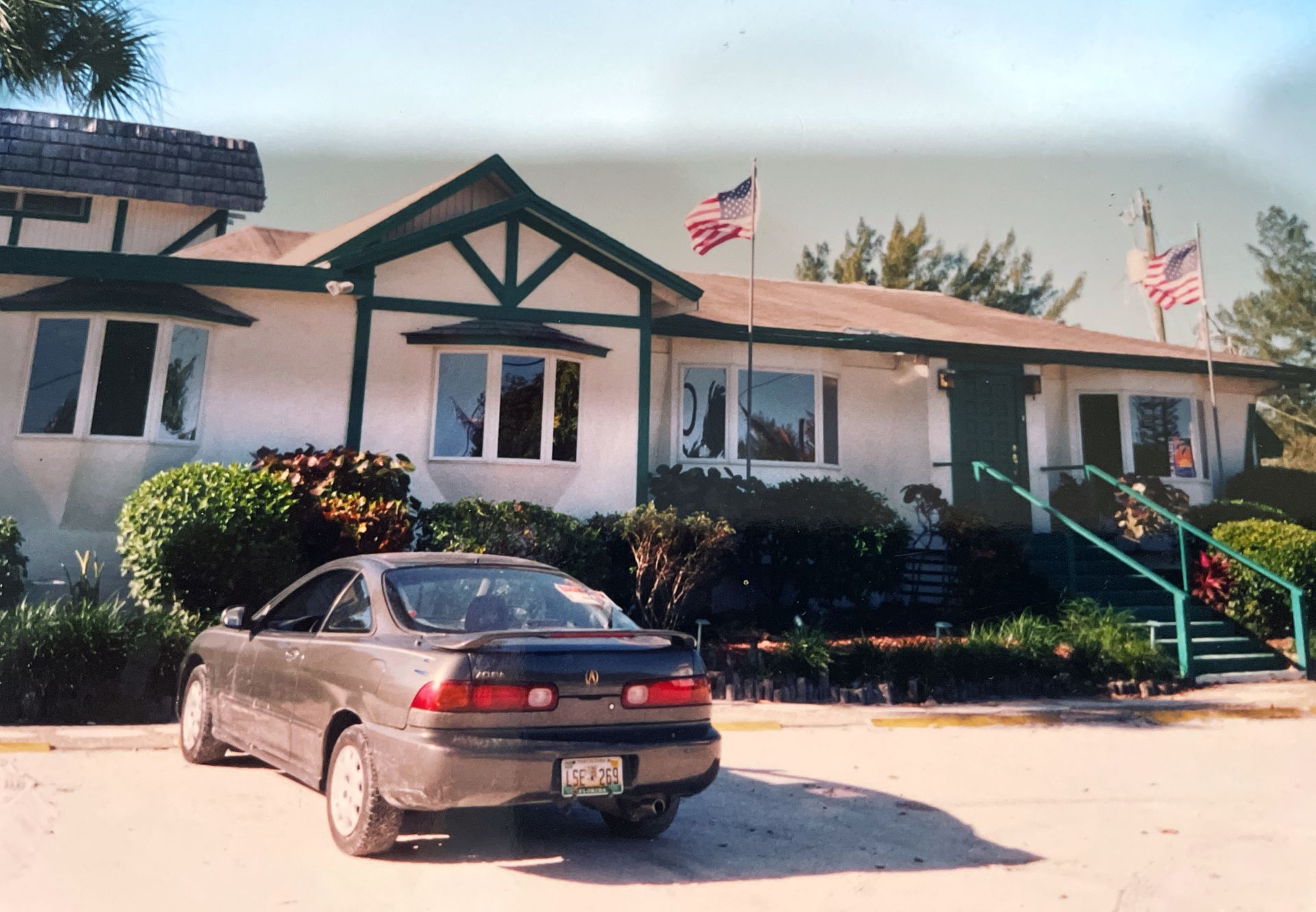
Yesterday I was surfing the Internet, and I came across an article about haunted restaurants. This article mentioned the Whale (formerly the Beached Whale and before that the Mermaid Club) as being haunted by the ghosts of Jim and Mary Galloway (I covered their murder in an earlier posting). Suddenly, I remembered reading about another haunted restaurant on the island: the Holmes House. This led me down a rabbit hole as I got caught up in trying to learn more about the ghost that was supposed to be the daughter of the restaurant owner who had died (I can’t remember how she was supposed to have died). Unfortunately, I came up empty on the ghost story, but I did learn some interesting facts about this lost icon of Fort Myers Beach.
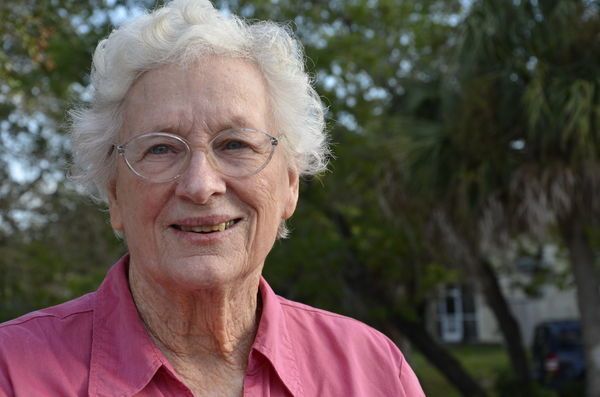
The passing of longtime Beach resident AJ Bassett this week is another loss for our island. AJ was one of the few residents still alive who were on the island in the 1940s. When her newly widowed mother, Mildred, packed up her three children (AJ, Connie, and Frandy) and her mother and drove from Philadelphia to Fort Myers Beach, there were just 279 people living on the island. Connie and AJ were only 6 years old. The family rented a cottage on the beach and began their new life as islanders.
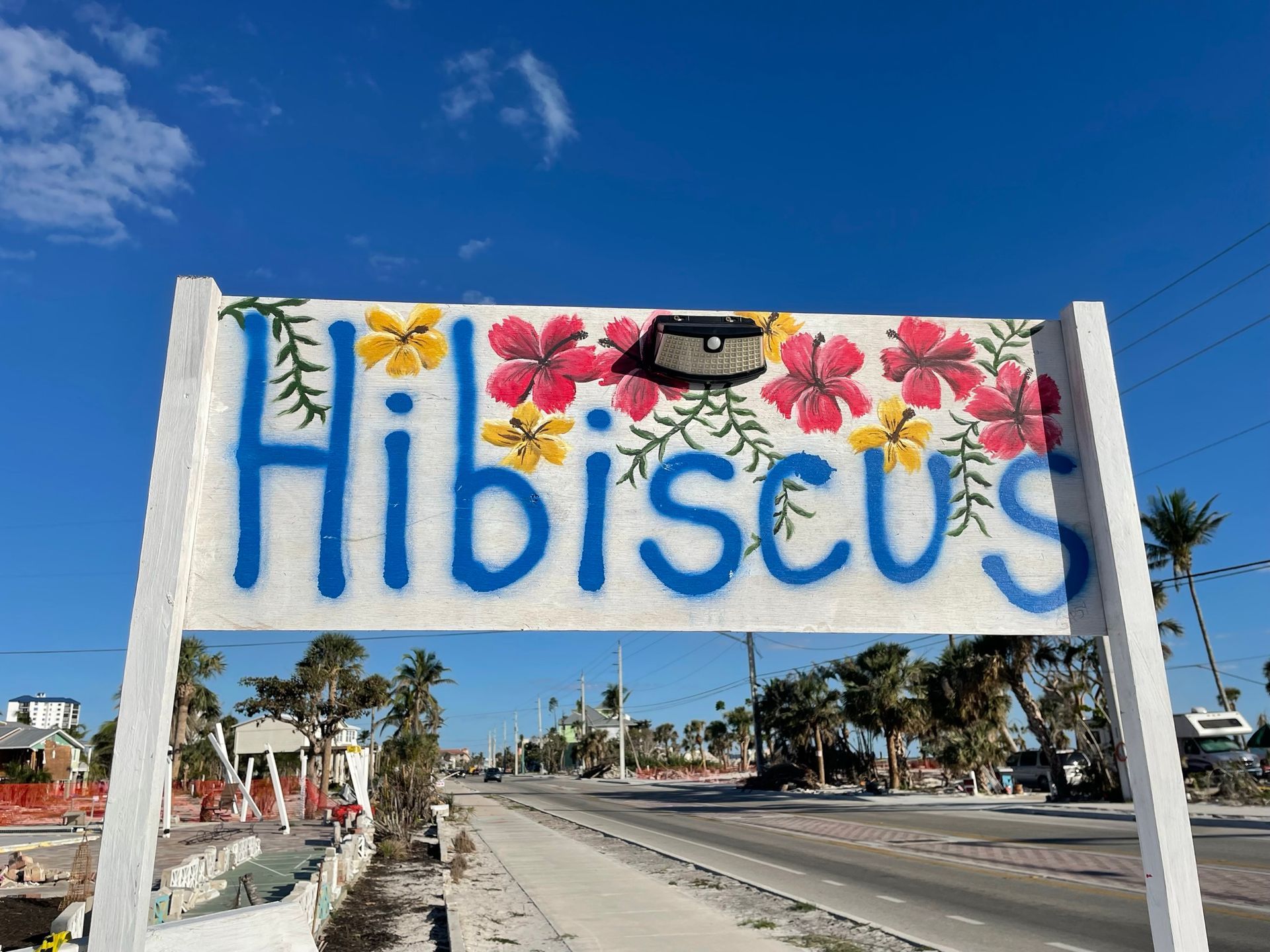
For the past few weeks, volunteers have been busy painting street signs to help people navigate on the island. Very few of the “Approved” signs survived the storm, so this was a great way for people to help out with the rebuilding of FMB. Unfortunately, some controversy has arisen about these signs since they are not “up to code.” I thought this might be a good time to look back about seventy years when the last sign controversy rocked the Beach.
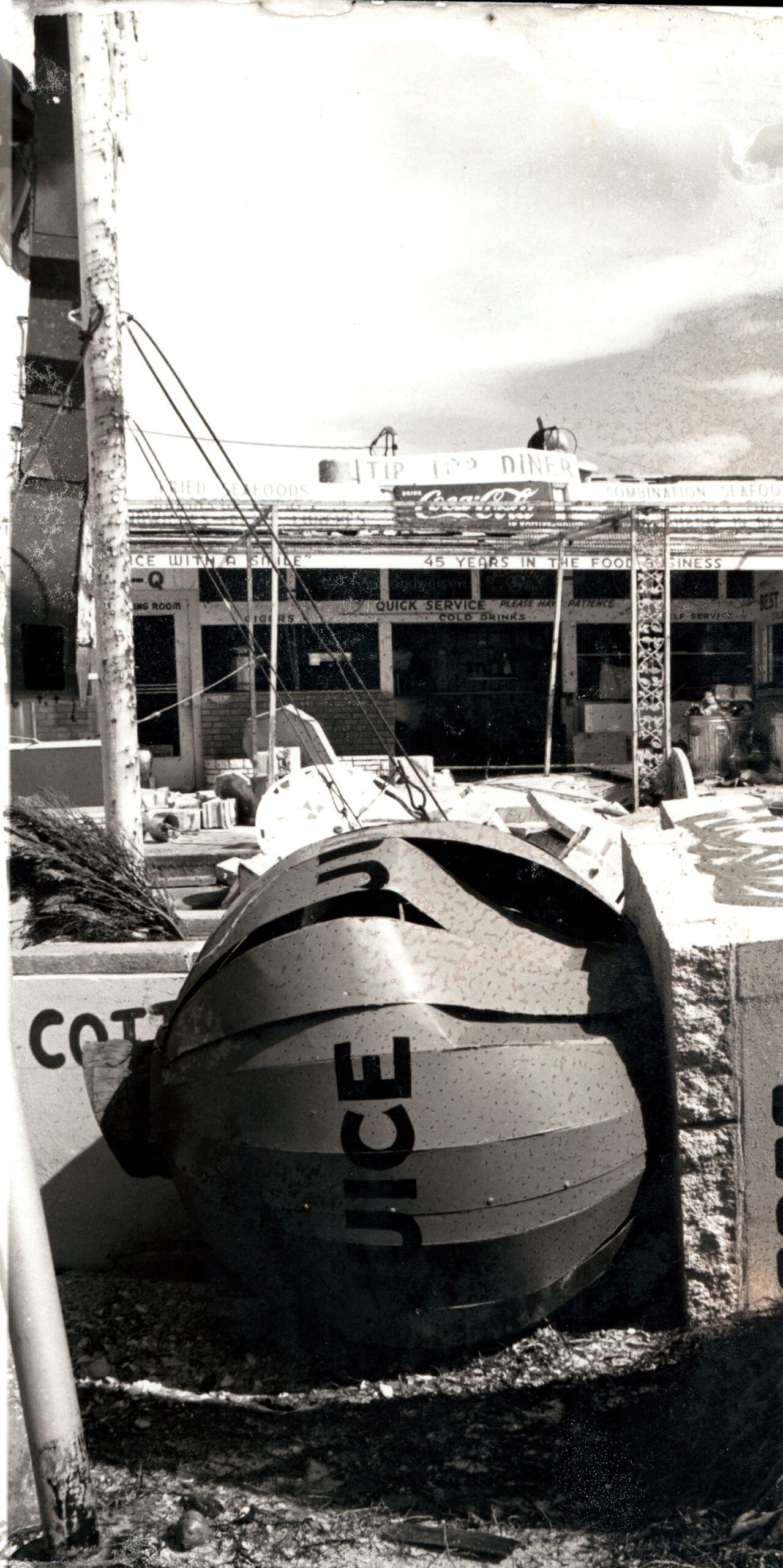
Times Square after Ian. Every business on the gulf was wiped out. “Mobile homes, boats, washing machines, parts of roofs and walls and dining room sets were scattered through miles of mangrove jungles lining Estero Bay. Some residents who built their homes on the ground level saw water levels as high as five feet on their living room walls. In some spots along the bay, mangled boats were piled on top of one another or sunk beneath the waves with only their bows or sterns visible. The crushing winds toppled virtually every tree. About five frame cottages had been swept into the Gulf. The driveway was blocked by a house that had been blown there from across the highway. For week’s after the storm, hundreds of men and women were digging out and repairing homes and businesses up and down the island, some with shovels, others with chainsaws plugged into gas powered generators. Seven days a week, the grinding noise of machinery droned on, making the beach sound like one giant factory.” Does this sound familiar? This was written by long time beach resident and News-Press reporter, Lee Melsek in 1991 as he was reflecting on a Hurricane that wiped out Fort Myers Beach in 1960. The headline said it all: Donna’s fury unimaginable. 1960 hurricane came close to washing away Fort Myers Beach. I found this article while going through some Christmas decorations, and it brought back memories of September 10, 1960. In his article, Melsek reflects on his experiences before, during, and after the storm. This story could have been written today.
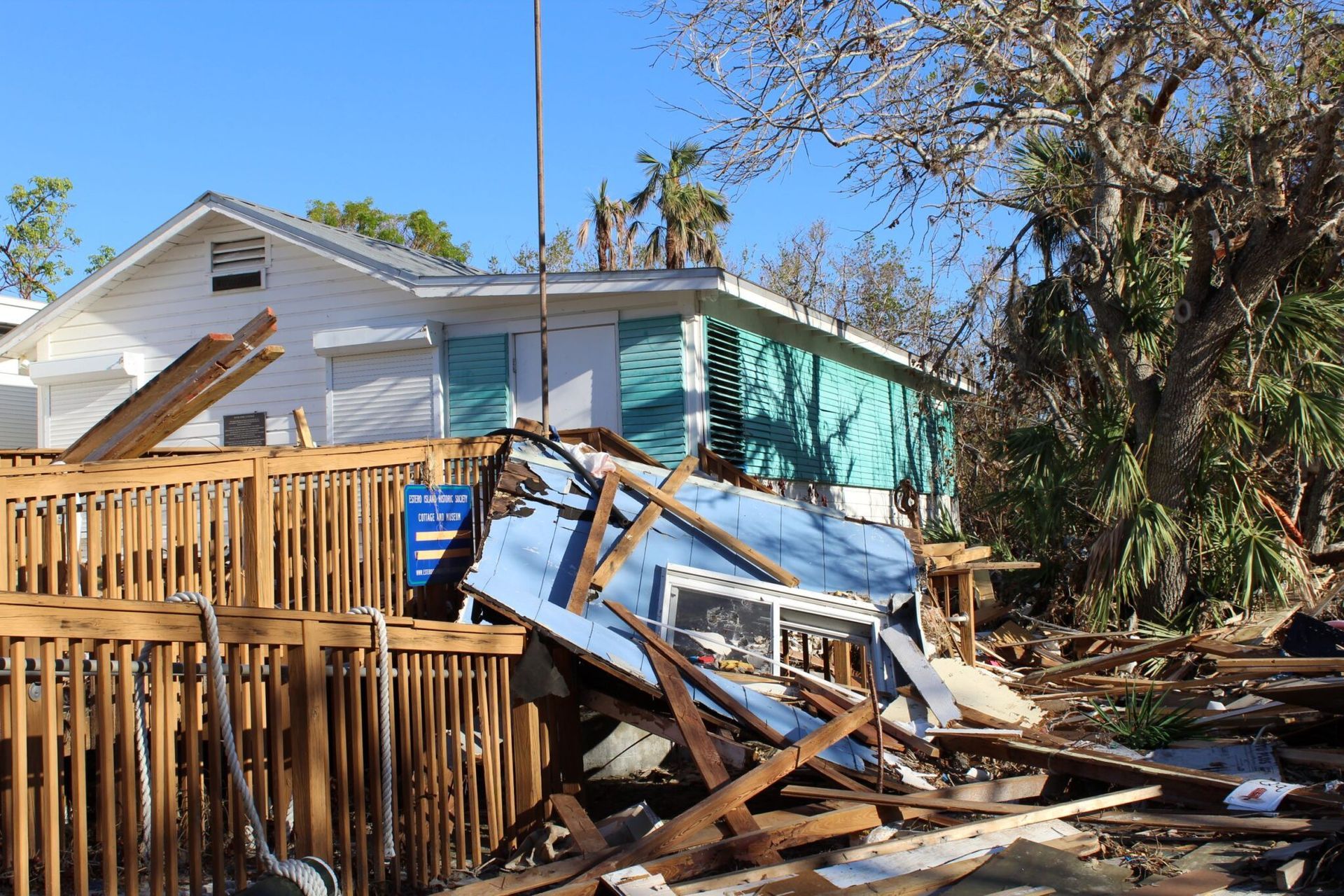
Although it was not easy, thanks to Jon Bloch of Spartan Blue Knights, a couple of board members were able to take a peek inside the Estero Island Historic Society Museum located at the end of Bay Road.
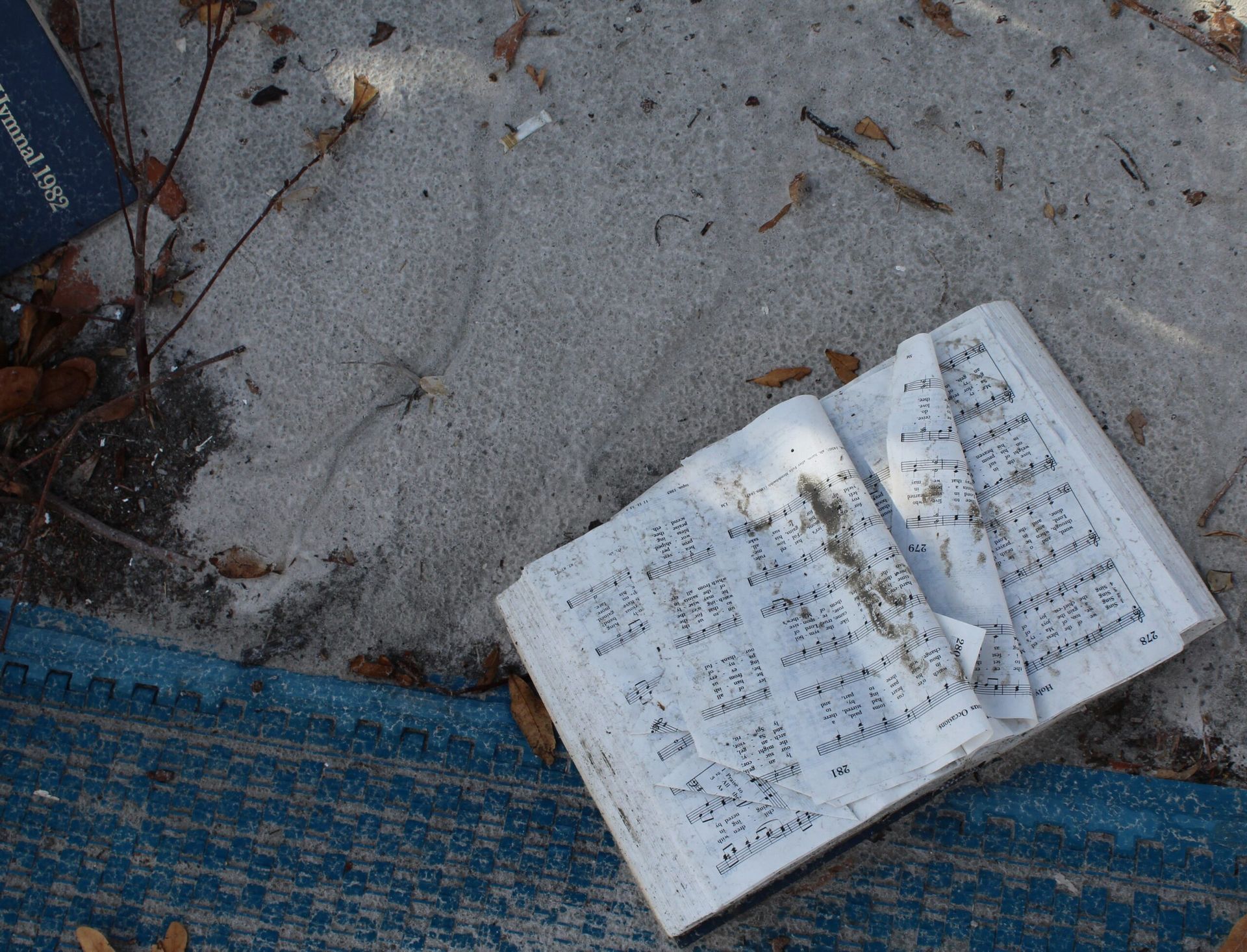
This is the original Chapel By The Sea sanctuary After driving down Estero Blvd this week, I noticed that my goal to write about lost icons on the island was going to be a large undertaking since so many buildings were destroyed in the storm. To me, it was heartbreaking to view the damage done to our island’s churches. I find it amazing that on a seven-mile-long island, we had all the major Christian denominations represented. The damage done to all the churches is extensive. Here is a brief look at the growth of religious institutions on FMB.
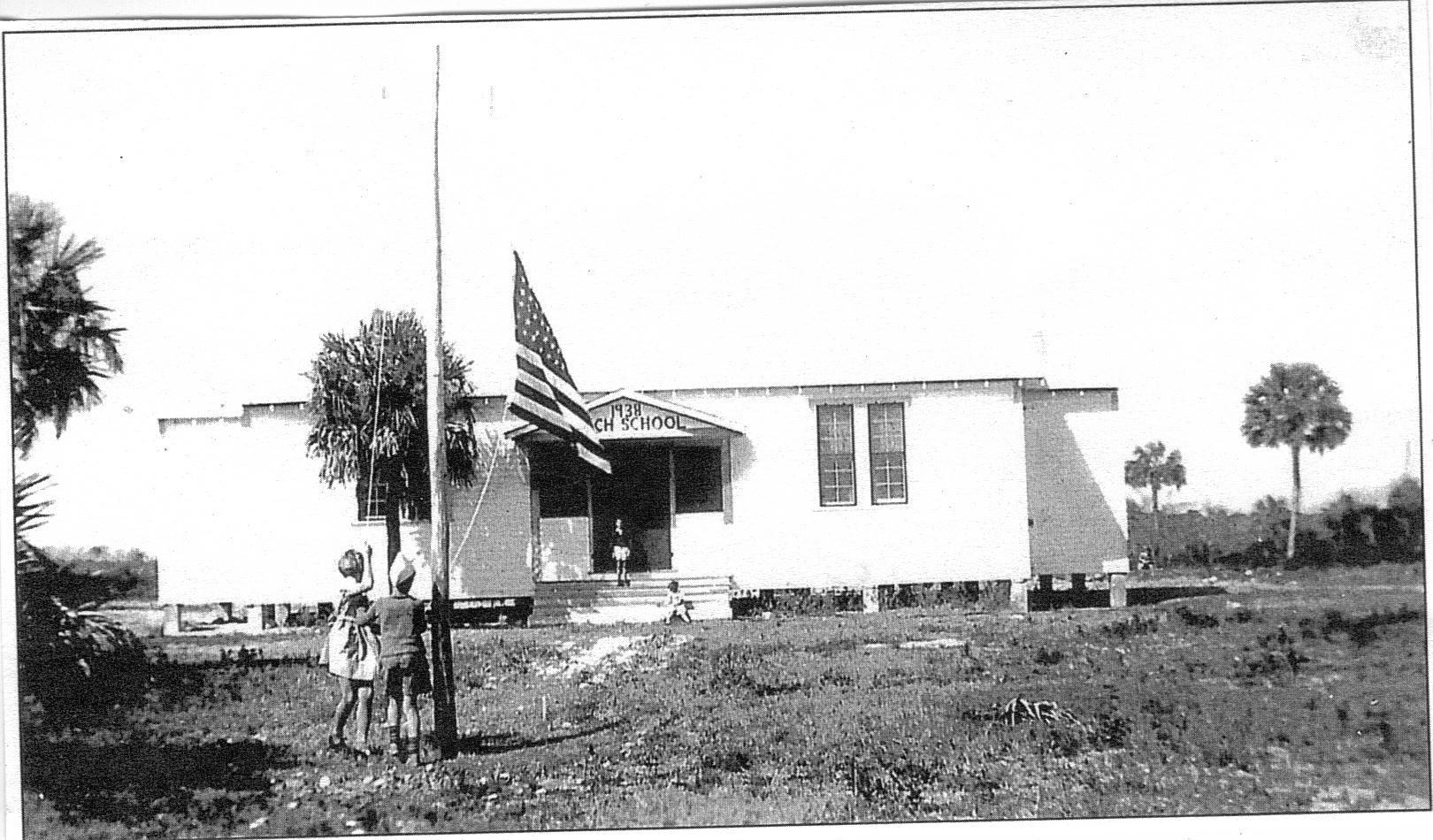
Tomorrow at 6 PM at Skip One Seafood, there will be a meeting to discuss the future of the Beach School. This school has been an integral part of our community since 1937. I attended the Beach School in the late 50s. My children attended the Beach School in the 90s. My mother taught at the Beach School for many years. My daughter did her teaching internship at the Beach School. The Beach School is a very special place, and it needs to be available for future generations of beach kids to attend.
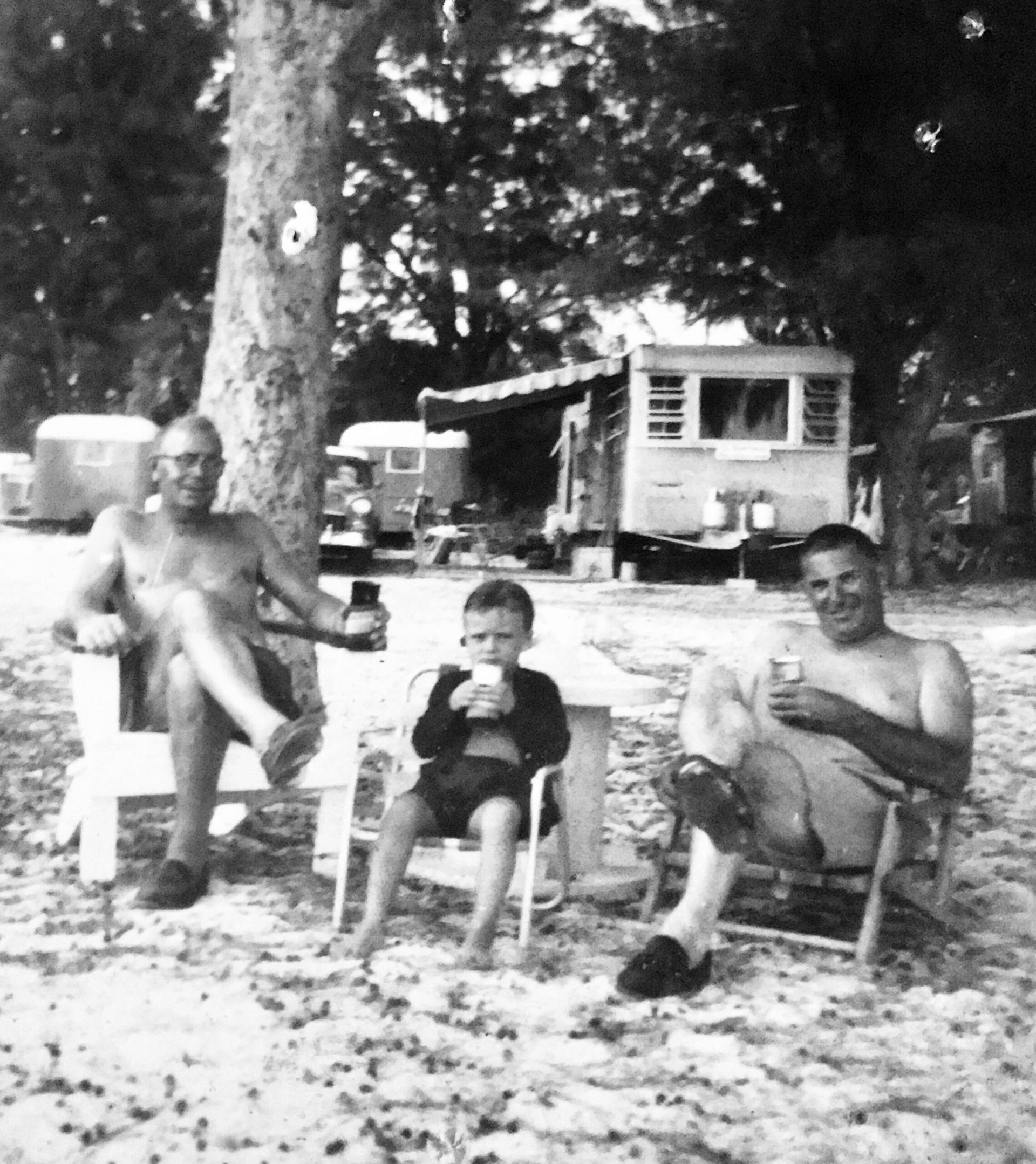
This is a picture of me, my dad, and my uncle enjoying happy hour at the red coconut in the 1950s. Red Coconut RV Park was my home for the first 14 years of my life. We were living there when Donna hit in 1960. Over the years, we would take our RVs to Red Coconut for weekend getaways even though our home was less than three miles away. Although the gulf front property where Red Coconut is located was platted and surveyed in 1898, the trailer park was not established until the 1920s. Dr. Virgil Voorhis purchased the property for his trailer park and built a pavilion in 1932. The “Club House” was first used as a voting precinct, and later as a spiritual gathering place since there was no church on the island at that time. Later Voorhis conducted bingo games to raise money for the first one room beach school which opened in 1937.
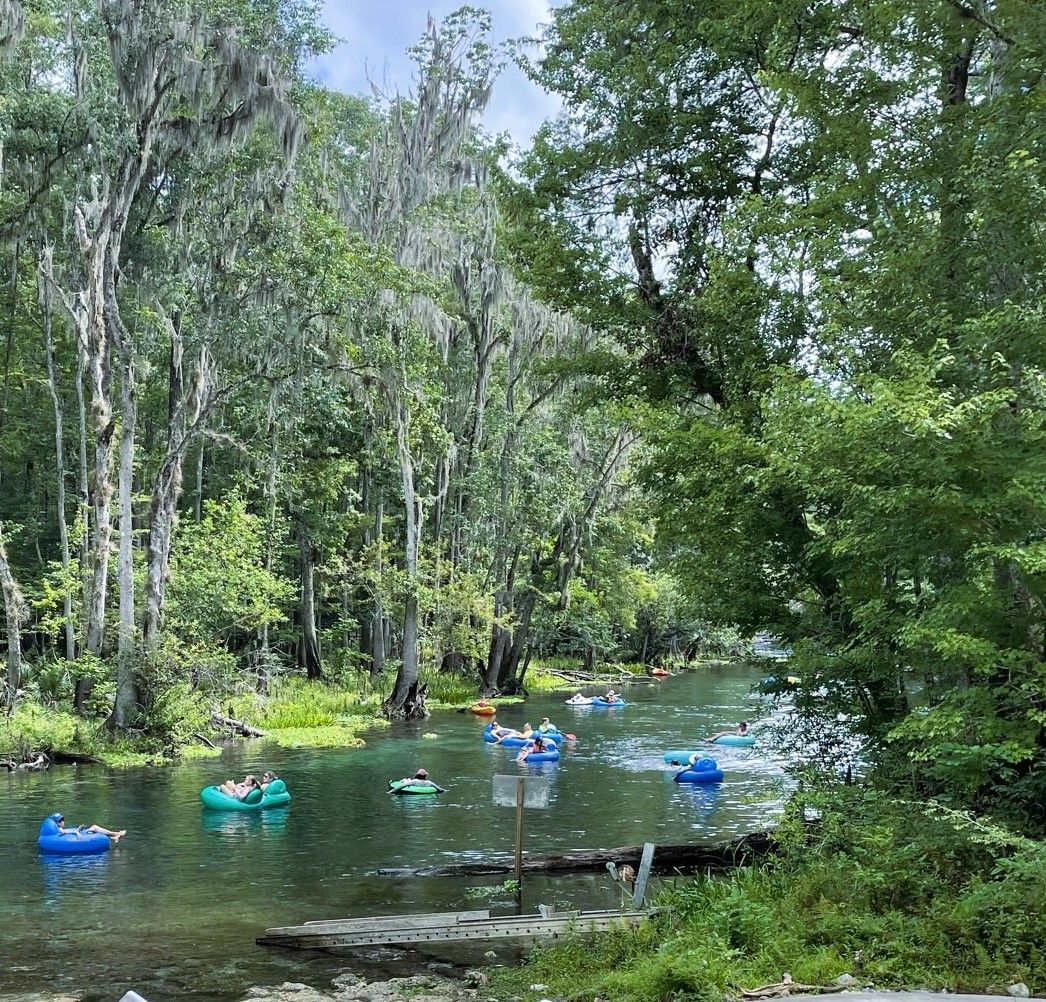
Ichetucknee Springs Most people who visit Florida tend to flock to the coast where they can enjoy the beaches and swim in either the Gulf of Mexico or the Atlantic Ocean. However, in the middle of the summer, neither the gulf nor the ocean will provide much relief from the heat. The best places to cool off on those hot summer days are the springs. Florida is the home to many beautiful natural springs where the water is always a cool 72 degrees. A couple of weeks ago, we visited Crystal River, and I wrote about Kings Bay and the different springs we visited in that area. This weekend, we traveled a little farther north to a small town called Fort White where eight major springs meet to form the Ichetucknee River, one of the best springs in the state. Brief History Let’s begin with a brief history lesson. Nearly 14,000 years ago, Florida’s climate was much cooler and drier than it is today. There were not many water sources at that time. The springs began as limestone basins and were nothing more than non-flowing pools where animals came to drink. The early Indians came to the water holes to hunt and drink the water. The water table rose as the climate warmed. Eventually, the spring pools overflowed their banks covering the land. This was the birth of the spring runs and rivers. The natives used these new water routes for transportation. Archaeologists have discovered many artifacts on the banks of the Ichetucknee River leading them to hypothesize that this was an important canoe port at one time. In the 1500s, the Timucua Indians built a village along the river, and in the 1600s, the Franciscan missionaries established missions in the same area. In the mid-1700s, the Creek Indians came to Florida from Georgia and Alabama. One village was established near the mouth of the Ichetucknee. They named the river Ichetucknee which meant “place of the beavers.” In the 1800s travelers on the historic Bellamy Road, would stop by Ichetucknee Springs to rest and drink the water. Later, a gristmill and general store popped up at Mill Pond Spring. In the late 1890s and early 1900s, this area became ground zero for the Florida Phosphate industry. Later, sawmills and turpentine operations replaced phosphate mining and from the turn of the century to the 1940s, cypress and pine forests were harvested for lumber. For many decades, the springs of the Ichetucknee have been a favorite place for locals to gather for picnics, family reunions, and even baptisms. In the 1950s and 60s, the Loncala Phosphate Company owned the land surrounding the springs. At this time, people discovered tubing, and college students from UF would spend weekends partying and floating down the river on tubes. Loncala allowed the students and other visitors to use the river for recreation, but the popularity of the river soon overwhelmed the natural resources. In 1970, Loncala sold the property to the state to be turned into a state park where the fragile ecosystem could be protected. The state cleaned up the river and in 1972, the river and springs were declared a National Natural Landmark. Our Visit
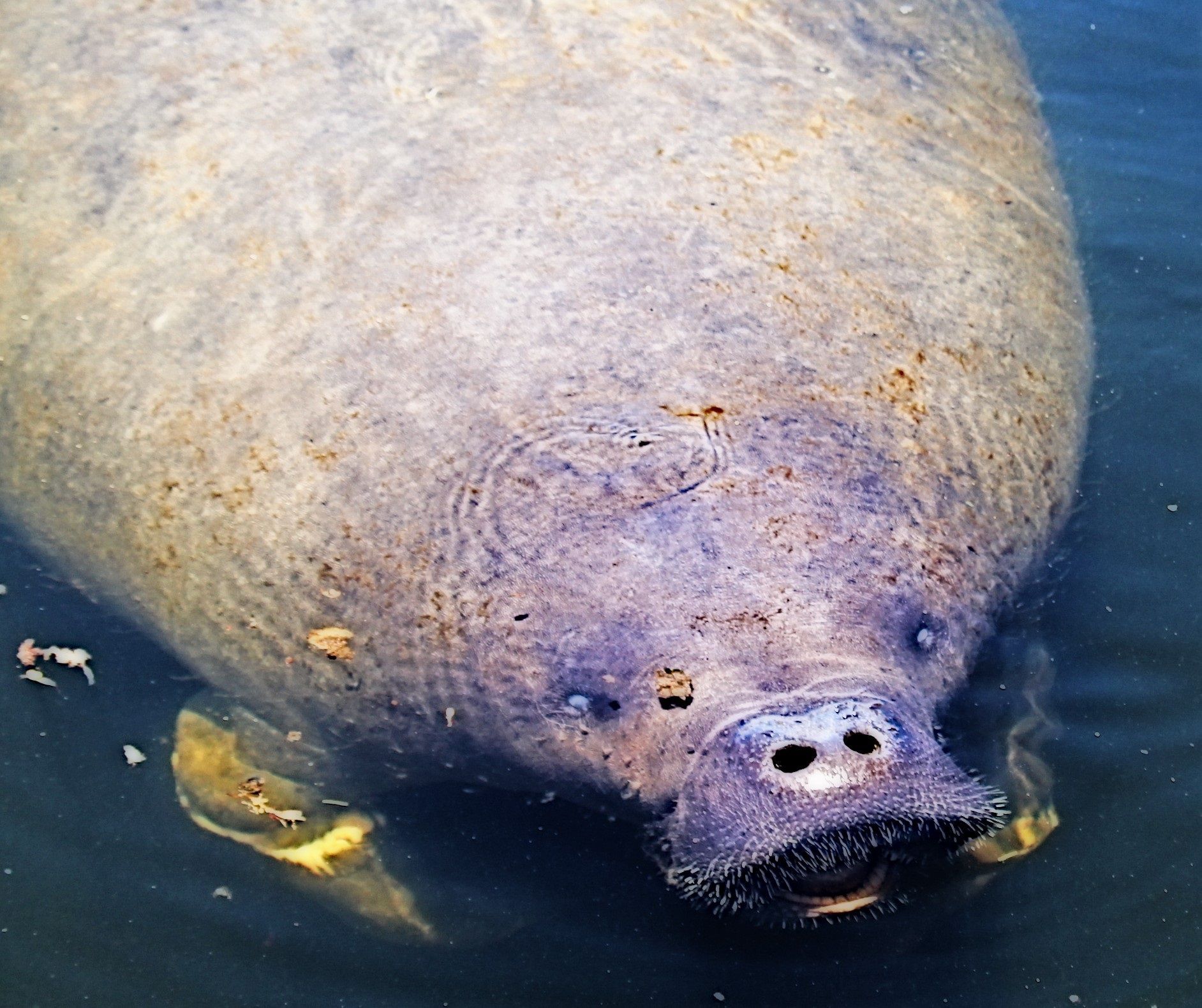
A short paddle up the river to Three Sisters Springs By the end of July in Southwest Florida, I am ready to cool down. With the gulf temperatures hovering in the low 90s and the air temperature above 100, this is not an easy task. Therefore, we decided to head north in search of cooler waters. Crystal River is a city located on Kings Bay on the Nature Coast of Florida. Kings Bay is fed by 70 first-magnitude springs which discharge about 600 million gallons of water each day, making Crystal River Springs the second largest spring in the state right behind Wakulla Springs near Tallahassee. During the winter when the gulf water cools, over 400 manatees come into Kings Bay to keep warm in the 72 degree spring fed waters.